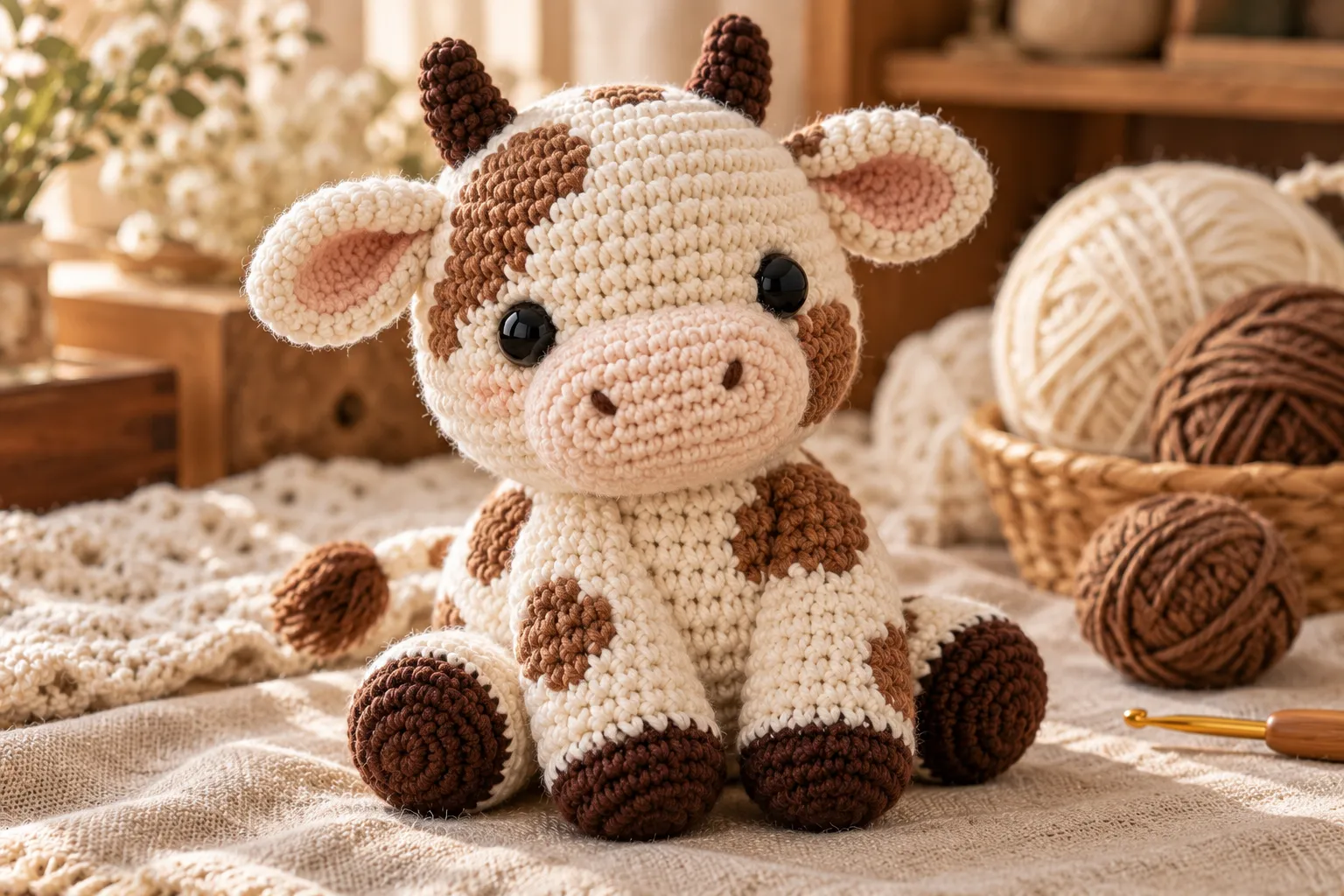
A crochet babydoll cow is one of those amigurumi projects that instantly feels charming. With its rounded body, tiny legs, soft ears, little horns, and sweet embroidered face, this cow design has the cozy look of a handmade nursery toy.
Whether you are an experienced amigurumi maker or just beginning to experiment with crochet animals, a babydoll cow is a fun project to customize. You can make it in classic black-and-white cow colors, soft cream and brown, pastel shades, or even create an entirely whimsical version.
This guide explores the design, construction, yarn choices, color combinations, facial details, customization ideas, and practical tips for creating a crochet babydoll cow.
What Is a Crochet Babydoll Cow?
A crochet babydoll cow is a small stuffed crochet animal designed with exaggerated cute proportions.
Instead of trying to create a realistic cow shape, the babydoll style usually focuses on:
- A large rounded head
- A compact body
- Short legs
- Small rounded hooves
- Tiny horns
- Floppy or rounded ears
- A wide muzzle
- Simple embroidered eyes
- Distinctive cow spots
- A soft, cuddly silhouette
The result is a character that looks more like a little stuffed doll than a realistic farm animal.
This style works particularly well for amigurumi because crochet naturally allows you to build rounded three-dimensional shapes.
Why Crochet Babydoll Cows Are So Popular
Cow amigurumi has a particularly cute aesthetic because the natural markings of a cow can be translated into simple crochet details.
The spots can be added as separate crochet pieces, embroidered onto the body, or incorporated directly through color changes.
The combination of a creamy base color with contrasting brown or black details creates an instantly recognizable design.
The babydoll proportions make the project even more appealing because the finished cow can have a very soft, rounded appearance.
A small crochet cow can also be used as:
- A handmade gift
- Nursery decoration
- Shelf decor
- Farm-themed room decor
- Crochet collection piece
- Photography prop
- Handmade market item
- Personalized gift
Materials You May Need
Before beginning a crochet babydoll cow, gather your basic amigurumi supplies.
Yarn
Cotton yarn is an excellent choice because it provides clearly defined stitches and a structured finish.
Good color combinations include:
- Cream + brown
- White + black
- Beige + chocolate brown
- Ivory + caramel
- White + dusty pink
- Cream + sage green
- Beige + terracotta
For a softer plush effect, chenille or velvet yarn can also be used.
However, plush yarn tends to make individual stitches more difficult to see, so cotton yarn is often easier for beginners.
Crochet Hook
Choose a crochet hook appropriate for your yarn.
For amigurumi, the hook is generally smaller than what you would use for a loose crochet fabric. A tighter stitch helps prevent stuffing from showing through the finished toy.
Always check the yarn manufacturer’s recommended hook size and adjust according to your tension.
Other Supplies
You may also need:
- Polyester fiberfill
- Tapestry needle
- Stitch marker
- Scissors
- Black embroidery thread
- Brown yarn for spots
- Pink or peach yarn for the muzzle
- Safety eyes, if appropriate
- Small amounts of contrasting yarn
For toys intended for babies or very young children, embroidered facial features are preferable to detachable small parts.
Choosing the Perfect Cow Colors
The traditional cow color palette is always a great starting point, but there is no need to limit yourself to realistic colors.
Classic Black and White
A white body with irregular black spots creates the familiar cow appearance.
Keep the spots asymmetrical to make the finished amigurumi look more handmade.
Cream and Brown
Cream with warm brown spots creates a softer, rustic aesthetic.
This combination works especially well for farmhouse-inspired crochet projects.
Beige and Caramel
For a more neutral design, try:
- Warm beige body
- Caramel spots
- Dark brown hooves
- Cream muzzle
This palette gives the cow a cozy handmade appearance.
Pastel Cow
If you want something more whimsical, replace traditional spots with pastel colors.
For example:
- Cream + blush pink
- Cream + lavender
- White + baby blue
- Beige + sage green
These versions can work particularly well as decorative crochet dolls.
Understanding the Basic Construction
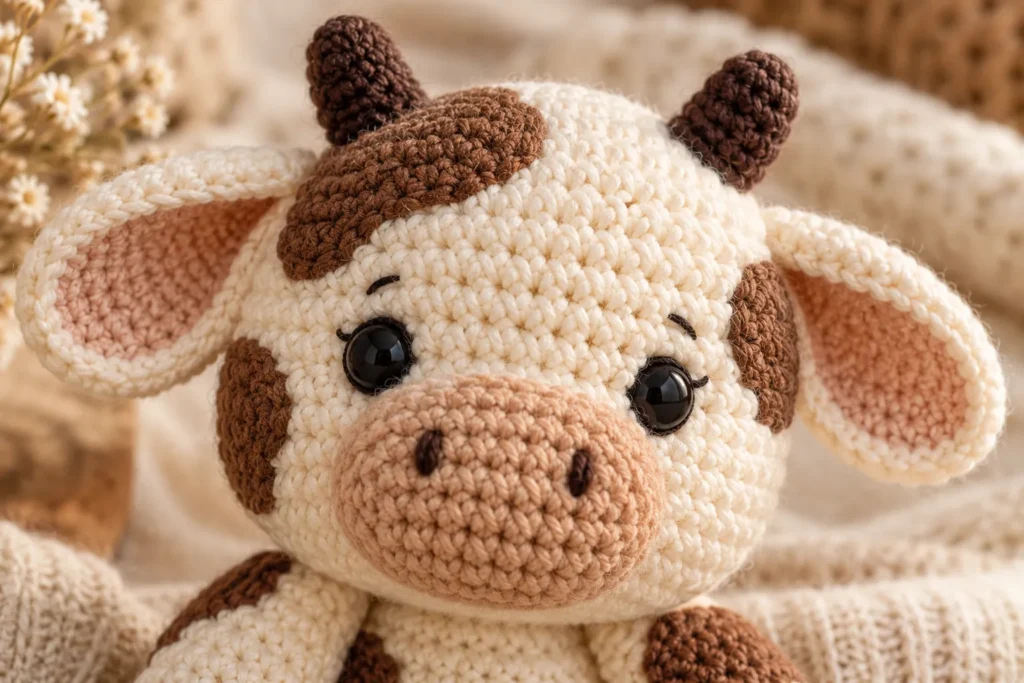
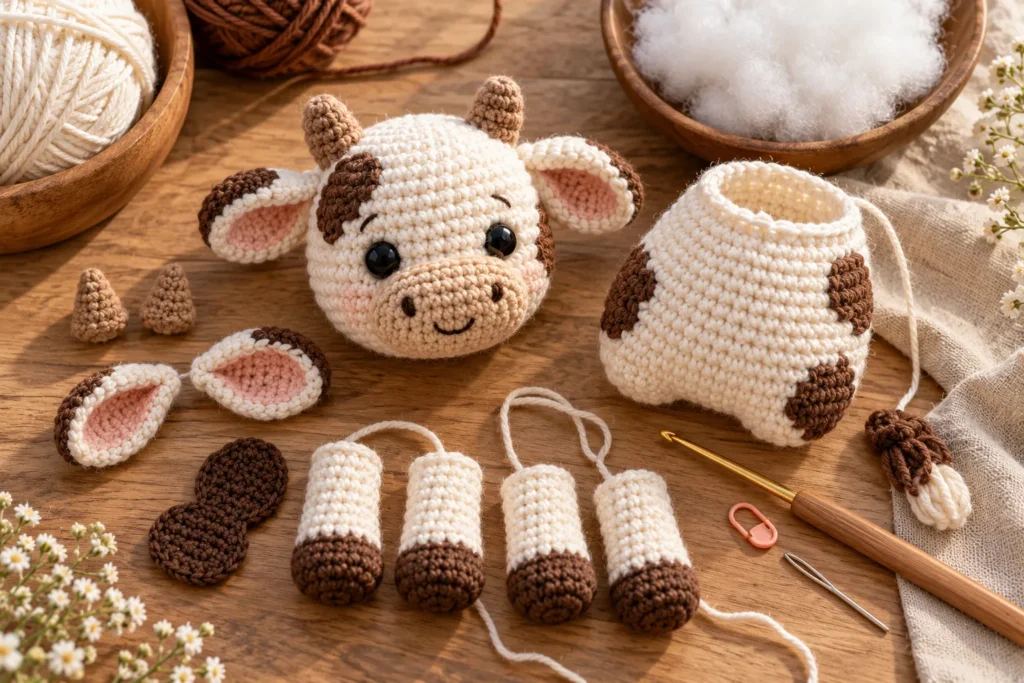
A babydoll cow can be constructed from several separate crochet pieces.
The main components usually include:
- Head
- Body
- Muzzle
- Two ears
- Two horns
- Four legs
- Tail
- Spots
- Facial details
The exact construction varies depending on the pattern.
Some designs crochet the head and body separately and sew them together, while others create one continuous piece.
For beginners, separate pieces can be easier to understand because each shape can be completed individually.
Making the Rounded Head
The head is one of the most important parts of a babydoll cow.
A classic amigurumi head starts with a small magic ring and gradually increases around the center.
After reaching the desired width, several rounds are crocheted without increases to create the rounded middle.
The piece is then gradually decreased toward the top.
The goal is not to create a perfect sphere. A slightly wider lower section can make the finished cow look more baby-like.
When stuffing the head, add fiberfill gradually rather than placing everything inside at once.
This allows you to control the shape.
Creating the Cow Muzzle
The muzzle gives the cow much of its personality.
A small oval or rounded crochet piece can be attached to the front of the face.
A contrasting color makes it stand out.
For example:
- Cream cow → pink-beige muzzle
- White cow → light brown muzzle
- Beige cow → darker caramel muzzle
You can embroider two small nostrils onto the muzzle using dark brown or black yarn.
Avoid making the nostrils too large. Small details usually create a sweeter expression.
Designing the Eyes
The eyes dramatically affect the personality of your crochet cow.
You can create several different looks.
Embroidered Eyes
Embroidered eyes are ideal when making a toy for a young child because there are no detachable plastic components.
Simple vertical stitches can create sleepy eyes.
Small circular embroidery can create an alert expression.
Safety Eyes
Safety eyes can create a polished amigurumi appearance, but they should be used according to their manufacturer’s instructions and are not a substitute for age-appropriate toy safety.
Closed Eyes
Two curved embroidered lines can create a peaceful sleeping expression.
This is particularly cute for a babydoll-style cow.
Adding the Cow Spots
The spots are one of the most recognizable parts of the design.
There are several ways to create them.
Crocheted Spots
Small irregular shapes can be crocheted separately and sewn onto the body.
This makes it easy to position the spots after completing the cow.
Embroidered Spots
You can also embroider small patches directly onto the body.
This works especially well for tiny cows.
Color Changes
For a more integrated finish, some patterns use different yarn colors while crocheting the body.
This produces permanent spots without additional sewing.
However, color changes can be more challenging for beginners.
Making the Cow Ears
The ears should remain relatively small compared with the head.
A simple rounded or slightly pointed crochet shape works well.
For an especially cute appearance, make the ears slightly floppy.
You can use a darker color inside each ear to create additional dimension.
For example:
Outer ear: cream
Inner ear: soft pink or light brown
Sew the ears onto the sides of the head at a slight angle.
Changing the angle can completely change the expression of the finished cow.
Adding Tiny Horns
Small horns help immediately communicate the cow character.
They can be crocheted separately and attached to the top of the head.
Brown, beige, or dark caramel yarn works well.
Keep the horns proportionally small if you want a baby-doll aesthetic.
Oversized horns can make the character look more cartoon-like, while tiny horns create a softer appearance.
Creating the Little Legs
Short, rounded legs are ideal for a babydoll cow.
Each leg can be crocheted as a small stuffed tube or rounded cylinder.
The bottom can be finished in a darker shade to represent the hoof.
For example:
Leg: cream
Hoof: dark brown
Keep the legs relatively short and thick.
This gives the cow a stable, chunky appearance.
When attaching the legs, position them evenly so the finished cow can sit or stand depending on the design.
The Crochet Cow Tail
The tail can be surprisingly simple.
A small crocheted cord or narrow chain can form the main tail.
A tiny tuft can be added at the end.
You can use dark brown or black yarn for the tuft.
Attach the tail toward the lower back of the body.
For a sitting cow, slightly raise the tail position so it remains visible from behind.
Stuffing Your Crochet Cow
Stuffing is one of the most important steps in amigurumi.
Too little stuffing can make the cow look flat.
Too much stuffing can stretch the stitches and create visible gaps.
Start with small amounts of polyester fiberfill.
Push the stuffing gently into the corners using the blunt end of your crochet hook or a stuffing tool.
Continue adding small amounts until the shape feels firm but still soft.
The head should generally be slightly firmer than the body if you want it to maintain its rounded shape.
How to Get a Professional Finish
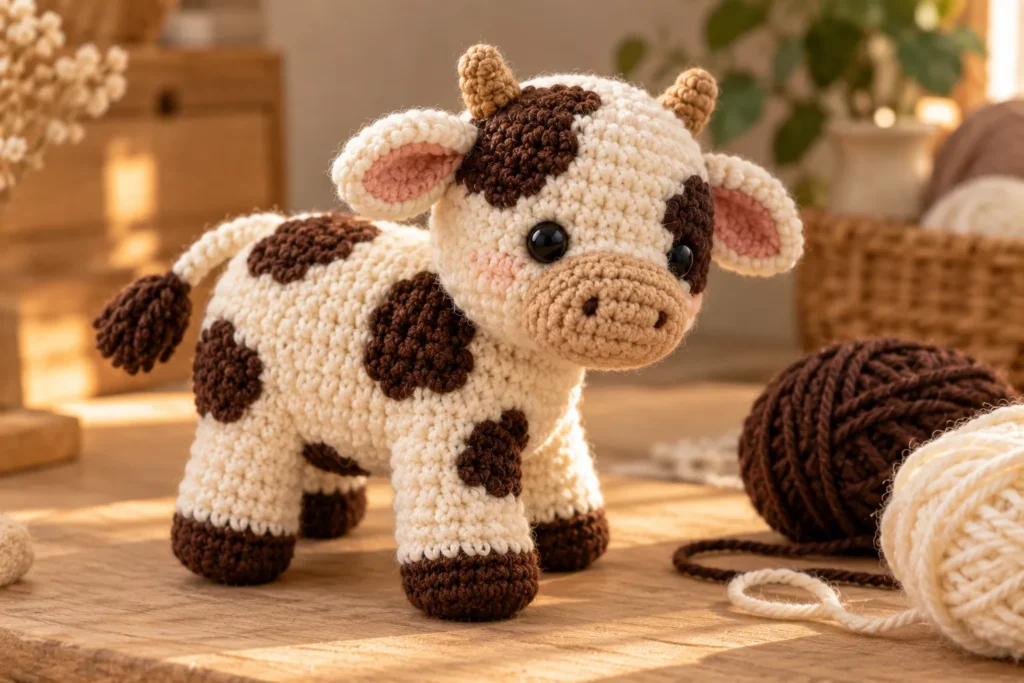
Even a simple crochet cow can look professionally made when attention is given to finishing.
Keep Your Tension Consistent
Consistent tension creates even stitches.
If your stitches become loose and tight throughout the project, the finished shape may look uneven.
Hide Yarn Ends Carefully
Secure and weave in yarn ends inside the piece whenever possible.
Trim excess yarn only after making sure the end is properly secured.
Check Symmetry
Before permanently sewing pieces in place, pin them first.
Check:
- Ear height
- Eye position
- Leg spacing
- Horn placement
- Muzzle position
A few minutes of checking can make a big difference.
Cute Crochet Babydoll Cow Variations
Once you understand the basic construction, you can create many variations.
Sleepy Cow
Use embroidered closed eyes and a tiny smile.
Add a small crocheted flower near one ear for a gentle decorative touch.
Highland-Inspired Cow
Use fluffy yarn around the head to imitate a shaggy appearance.
Choose warm brown or cream colors.
Mini Cow Keychain
Create a much smaller version using lightweight cotton yarn.
Add a keychain attachment to the top.
Pastel Cow
Use soft pink, blue, lavender, or mint instead of traditional black or brown spots.
Cow With a Flower
Add a small crochet flower near one ear.
This gives the character a playful handmade appearance.
Cow With a Scarf
A tiny crocheted scarf can turn the basic cow into a seasonal decoration.
Try:
- Red and white for winter
- Orange and brown for autumn
- Pastel colors for spring
How to Make a Smaller Cow
If you want a miniature version, you can reduce the size by using thinner yarn and a smaller hook.
However, simply reducing the hook size without considering yarn thickness can make the project difficult to crochet.
A miniature cow may also require smaller facial details.
For tiny amigurumi, embroidered eyes are often easier to control than plastic components.
How to Make a Larger Crochet Cow
For a larger plush cow, chunky or plush yarn can dramatically increase the finished size.
Keep in mind that larger yarn requires more stuffing and can make stitch counting harder.
If you are using chenille yarn, work slowly and use a stitch marker to keep track of your rounds.
The final cow can have a very soft, plush-toy appearance.
Crochet Babydoll Cow as a Gift
A handmade cow can make a thoughtful gift because it can be personalized.
Consider matching the colors to the recipient’s favorite palette.
You could also add:
- A personalized scarf
- A crochet flower
- An embroidered initial
- A tiny blanket
- A matching mini cow
- A gift box with handmade packaging
For a farmhouse-themed nursery, a neutral cream-and-brown cow can also work beautifully as decorative crochet art.
Safety Considerations
If the finished cow is intended for a baby or young child, construction and materials should be selected carefully.
Avoid loose pieces that can detach.
Embroidered eyes and facial features are generally preferable to detachable small components for very young children.
Check all seams carefully and make sure stuffing cannot escape.
Do not add small accessories that could become choking hazards.
A crochet toy should also not be placed loose in a baby’s sleep environment.
For nursery photography, use crochet animals only under appropriate adult supervision and follow safe sleep guidance.
How to Customize Your Crochet Cow
One of the best things about making amigurumi is the ability to personalize every detail.
You can change:
Body color: cream, white, beige, brown, pastel
Spot color: black, brown, caramel, pink, lavender
Eyes: open, closed, embroidered, sleepy
Ears: upright, floppy, rounded
Horns: tiny, curved, contrasting
Muzzle: pink, beige, brown
Accessories: flower, scarf, bow, hat
Small changes can turn the same basic construction into completely different characters.
Beginner Tips for Making a Crochet Cow
If this is your first amigurumi project, don’t worry if your first attempt isn’t perfect.
Start with the simplest version.
Practice these techniques first:
- Magic ring
- Single crochet
- Increase
- Invisible decrease
- Working in continuous rounds
- Stuffing
- Sewing pieces together
- Weaving in ends
- Basic embroidery
Once these techniques become comfortable, you can experiment with more complicated cow designs.
Common Mistakes to Avoid
Using a Hook That Is Too Large
A large hook creates loose stitches, which can allow stuffing to show through.
Overstuffing
Overstuffing can distort the crochet fabric.
Add stuffing gradually.
Attaching Pieces Too Quickly
Always position the ears, eyes, muzzle, and legs before sewing them permanently.
Uneven Eyes
Use pins or removable markers to check eye placement before embroidering.
Forgetting to Count Rounds
Amigurumi depends heavily on controlled increases and decreases.
Use a stitch marker and count regularly.
Frequently Asked Questions
Is a crochet babydoll cow suitable for beginners?
Yes. A simple cow design using basic amigurumi techniques can be an excellent beginner project.
What yarn is best for a crochet cow?
Cotton yarn is particularly useful for beginners because its stitches are easy to see. Plush yarn can create a softer finished toy but may be more difficult to work with.
How do I make the cow spots?
You can crochet separate irregular patches, embroider spots, or incorporate them through color changes.
Can I make the cow in different sizes?
Yes. Yarn thickness and hook size can significantly change the finished dimensions.
Can I use embroidered eyes?
Yes. Embroidered eyes are especially useful when making crochet toys intended for young children.
How do I make the cow softer?
Plush or chenille yarn creates a very soft texture. A soft stuffing material can also help produce a cuddly finished shape.
Can I sell finished crochet cows?
If you are working from a purchased crochet pattern, check the designer’s specific terms regarding selling finished items. Pattern copyright and licensing terms can vary.
Final Thoughts
A crochet babydoll cow is a charming amigurumi project that combines simple rounded shapes with instantly recognizable farm-animal details.
The basic design can be kept simple for beginners or customized with different colors, spots, facial expressions, accessories, and yarn textures.
Whether you make a tiny cow for a crochet collection, a soft plush character, or a decorative farmhouse-inspired piece, the most important details are consistent stitches, careful shaping, secure assembly, and thoughtful finishing.